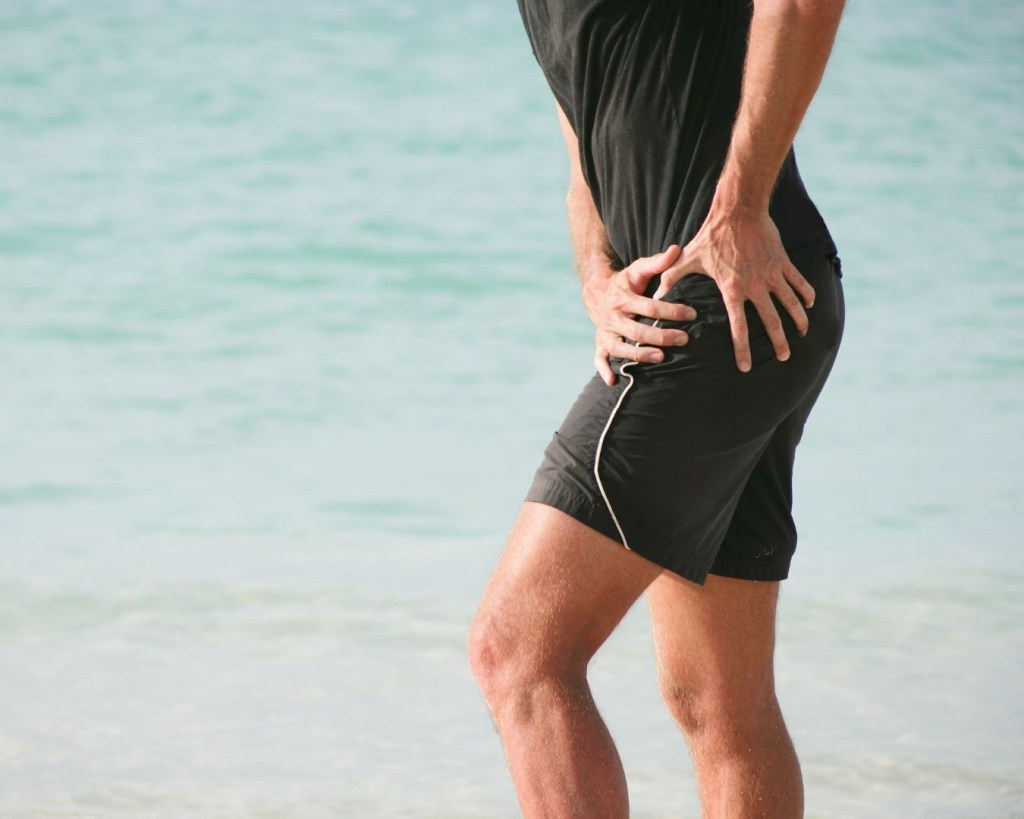
Hip bursitis can cause persistent pain around the outside of the hip, making everyday activities such as walking, climbing stairs, exercises or sleeping on your side uncomfortable.
While hip bursitis can be frustrating, appropriate management can help reduce irritation, improve movement and gradually build your capacity to return to activities that matter to you.
At Urban Health HQ, our occupational therapists and exercise physiologists work together to provide a holistic approach to managing hip bursitis. By combining soft tissue treatment, education, activity modification and individually tailored exercises, treatment can address both your current symptoms and the physical demands contributing to them.
What is hip bursitis?
A bursa is a small, fluid-filled sac that helps reduce friction between bones, muscles and other soft tissue around a joint.
Around the outside of the hip is the trochanteric bursa, located near the greater trochanter – the bony prominence at the top of the thigh bone. When this bursa becomes irritated, it can cause pain and tenderness around the outside of the hip.
Hip bursitis is often associated with pain over the outer hip and may be particularly noticeable when lying on the affected side, walking, climbing stairs or spending prolonged periods standing.
It is also important to recognise that pain in the area can involve several structures around the hip, including the muscles, tendons and bursa. For this reason, an appropriate assessment is important to understand what may be contributing to an individual’s symptoms.
What causes hip bursitis?
There is not always one specific cause of hip bursitis. Symptoms can develop gradually or following a particular injury, and several factors may contribute.
Repetitive activity and overuse
Repeated activities that place increased load through the hip can contribute to irritation. This may include activities such as prolonged walking, running or climbing stairs.
A sudden increase in activity can also be a contributing factor. For example, increasing your walking distance, starting a new exercise program or returning to sport after a period of reduced activity, or starting a new job may place more demand on the hip than it is currently prepared to tolerate.
Pressure on the outside of the hip
Direct or prolonged pressure around the outside of the hip can aggravate the area. This may include lying on the affected side for extended periods or experiencing a direct impact or fall onto the hip.
Changes in movement and physical activity
Changes in the strength, flexibility or function of the muscles around the hip can influence how load is distributed through the area.
This does not necessarily mean that a particular muscle is simply “weal” or that there is one movement causing the problem. Rather, hip pain can develop when the demands being placed on the tissues exceed their current capacity to tolerate those demands.
Changes in activity or lifestyle.
Hip bursitis can occur in people with very different activity levels. Someone who is regularly active may experience symptoms after a sudden increase in training, while someone who is less active may develop pain after a change in their usual walking or daily activities.
Understanding what has changed around the time symptoms developed can therefore be an important part of managing the condition.
What does hip bursitis feel like?
Symptoms can vary from person to person, but commonly symptoms include:
- Pain or aching over the outside of the hip
- Tenderness when pressure is applied to the area
- Pain when lying on the affected side
- Discomfort with walking or prolonged standing
- Pain when climbing stairs or walking uphill
- Increased symptoms following repetitive activity
For some people, symptoms may be relatively mild but become more noticeable during particular activities. For others, hip pain can begin to interfere with sleep, work, exercise and everyday activities.
How can Occupational therapy help?
At Urban Health HQ, our Soft Tissue Occupational Therapists use a combination of soft tissue treatment, education and activity modification to help manage hip bursitis.
Soft tissue treatment
Soft tissue massage can be used as part of an individual’s treatment to address areas of soft tissue discomfort and help support comfortable movement.
The approach is tailored to the individual and their presentation, rather than applying the same treatment to everyone with hip pain.
Education
Understanding your condition can be an important part of recovery.
Our Occupational therapists can provide education around hip bursitis, including factors that may be contributing to symptoms, activities that may aggravate the area and ways to manage symptoms throughout the day.
This can help you make informed decisions about your activities rather than feeling like you need to completely stop everything that you enjoy.
Activity modification
Completely avoiding activity is not always the answer. Instead, your occupational therapist can help identify ways to modify activities what are aggravating your hip while maintaining as much normal function as possible,
This may involve adjusting how an activity is performed, temporarily changing the amount or frequency of an activity, adjusting work setups, changing footwear, or identifying strategies to make work, exercise and everyday tasks more manageable.
How can Exercise physiology help?
Exercise physiology can complement the hands-on and functional approach provided by occupational therapy.
An exercise physiologist can assess your current physical capacity and develop an individualised rehabilitation program based on your symptoms, goals, lifestyle and activity demands.
Rather than prescribing the same exercises for everyone with hip bursitis, your program can be progressed according to how your body responds and what you need to return to.
Exercise may be used to gradually improve:
- Hip and lower-body strength
- Muscular endurance
- Balance and movement control
- Tolerance and everyday activities
- Capacity for work, sport and recreation.
The goal is to progressively build your physical capacity so that your hip can better tolerate the activities you need and want to perform. Exercise-based rehabilitation is an important component of conservative management for lateral hip conditions and is generally progressed according to the individual’s symptoms and functional goals.
How can occupational therapy and exercise physiology work together?
Occupational therapy and exercise physiology can complement each other by addressing aspects of your recovery.
Occupational therapy can focus on managing your symptoms in the context of everyday life through soft tissue treatment, education, and activity modification.
Exercise physiology can focus on progressively improving your physical capacity and helping your body adapt to the demands of your activities.
Together, this approach can help address both what is aggravating your symptoms now and how you can gradually build your capacity for the future.
For example, if walking has become painful, your occupational therapist may help identify ways to modify your daily activities and manage aggravating factors. Your exercise physiologist can then work with you to progressively build your strength and tolerance for walking.
This collaborative approach can be particularly valuable when hip pain has started to affect your work, exercise, sport, sleep or other aspects of everyday life.
Your treatment should be individualised
There is no one-size-size-fits-all approach to hip bursitis.
Your symptoms, lifestyle, work demands, exercise history and goals all influence what treatment may be appropriate. Someone wanting to return to running will have different rehabilitation requirements to someone whose primary goal is to comfortably walk around the shops or complete their workday.
At Urban Health HQ, our occupational therapists and exercise physiologists can work together to develop a treatment approach that considers the whole person – not just the painful hip.
If hip pain is affecting your ability to move, exercise, work or participate in everyday activities, our team can help you understand your symptoms and work towards improving your function and confidence.
Contact Urban Health HQ today to book an assessment and see how our allied health team can support your recovery. Visit our website at https://urbanhealthhq.com.au or contact us by calling 0411563391 or email admin@urbanhealthhq.com.au

