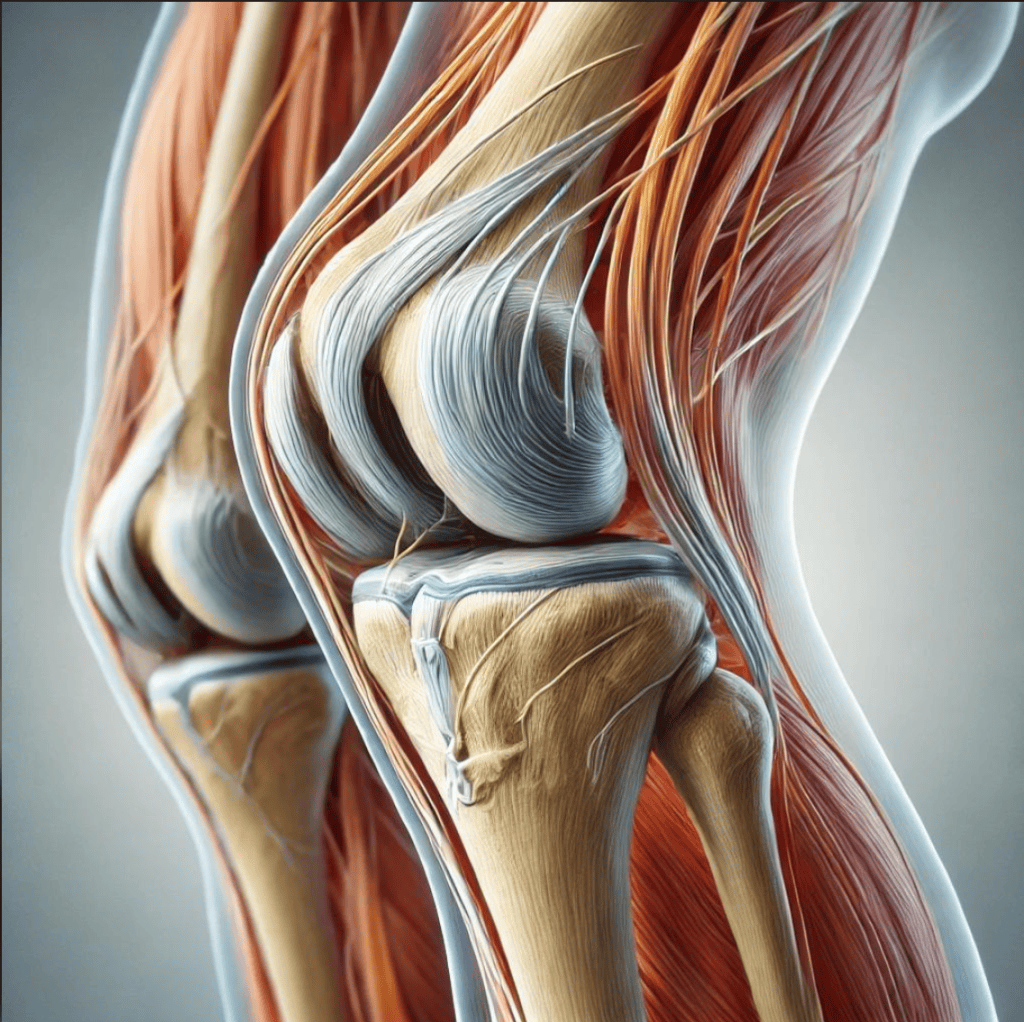
Collagen supplements have become increasingly popular in the health and fitness industry, particularly among athletes and people looking to improve joint health, support recovery and maintain healthy connective tissue. While collagen is often associated with skin health and anti-ageing, it also plays an important role in the structure and function of our muscles, tendons, ligaments, bones and cartilage.
But can collagen supplements actually help with injury recovery? And how can they be incorporated into an effective rehabilitation program?
Understanding the role of collagen in the body, how we obtain it through our diet and how supplementation may support tissue repair, can help you make more informed decisions about your recovery and overall musculoskeletal health.
What is collagen?
Collagen is the most abundant protein in the human body, making up approximately 25-30% of the body’s total protein content. It acts as a structural framework, providing strength, support and stability to many of our tissues.
Collagen is made up of three interconnected protein chains, primarily containing the amino acids glycine, proline and hydroxyproline. These chains twist together to form a strong, rope-like structure known as a triple helix. Multiple collagen molecules then organise into fibres, providing tissues with the strength and resilience needed to withstand everyday movement and physical activity.
Different tissues rely on collagen in different ways:
- Tendons and ligaments: collagen provides tensile strength, allowing tendons to transfer force from muscles to bones and ligaments to stabilise joints
- Bones: collagen forms the flexible protein framework that gives bones strength and helps them withstand impact.
- Cartilage: collagen provides structural support and helps cartilage tolerate compressive forces within joints.
- Muscles and fasciaM: collagen forms the connective tissue surrounding and supporting individual muscle fibres and larger muscle groups.
- Skin: collagen contributes to skin strength, structure and elasticity.
There are several types of collagen in the body, but three are particularly important:
| Collagen Type | Main locations and functions |
| Type I | Skin, bones, tendons and ligaments. Provides significant tensile strength. |
| Type II | Articular cartilage. Helps maintain the structural integrity of joints. |
| Type III | Muscles, blood vessels and internal organs. Provides structural support and elasticity. |
Why does collagen production matter?
Our bodies naturally produce collagen, but the ability to maintain and replace collagen gradually changes throughout life.
Several factors can influence collagen production and breakdown:
- Ageing: collagen synthesis gradually declines with age, contributing to changes in skin elasticity, bone structure and connective tissue health.
- Sun exposure: ultraviolet (UV) radiation accelerates collagen breakdown, particularly within the skin.
- Smoking: smoking can impair circulation and expose tissues to chemicals that contribute to oxidative stress and collagen damage.
- Diet and nutrition: inadequate protein intake and insufficient nutrients, particularly vitamin C, can interfere with normal collagen production.
- Physical activity: mechanical loading from appropriate exercise stimulates connective tissue adaptation and collagen remodelling.
Although collagen naturally declines with age, maintaining adequate nutrition and participating in regular, appropriately prescribed exercise can help support musculoskeletal health.
How can collagen supplements support injury recovery?
Collagen supplementation has attracted increasing interest in sports medicine and rehabilitation because of its potential role in supporting the repair and maintenance of connective tissue.
When we experience an injury, the body initiates a complex healing process involving inflammation, tissue repair and remodelling. During this princess, collagen is particularly important because it provides the structural framework needed to rebuild damaged connective tissue.
1.Tendon and ligament health
Tendons and ligaments contain large amounts of type I collagen, making collagen an important component of their structure and function.
Tendons transfer forces generated by muscles to bones, while ligaments help stabilise joints and prevent excessive movement. Both tissues experience considerable mechanical stress during everyday activities, exercise and sport.
Unlike some other tissues, tendons and ligaments have relatively limited blood supplies, which can contribute to their slow recovery following injury.
Collagen supplements provide amino acids, including glycine, proline and hydroxyproline, which are important building blocks for collagen production. Research suggests that consuming collagen or gelatin alongside targeted exercise may increase markers of collagen synthesis and potentially support tendon adaptation.
An important concept is that nutrition and mechanical loading work together. Supplementation provides some of the raw materials needed for collagen production, while appropriately prescribed exercise provides the mechanical stimulus that encourages tissues to adapt and remodel.
For this reason, collagen supplementation should be considered an addition to a structured rehabilitation program rather than a replacement for exercise-based treatment.
2.Bone Health and fracture recovery
Collagen is also an important component of bone structure.
Although calcium and other minerals provide bones with their hardness and resistance to compression, collagen forms the underlying flexible framework that helps bones withstand impact and tensile forces.
Following a fracture, the body initially develops a soft callus made up of developing connective tissue. This is gradually replaced by mineralised bone as healing progresses.
Adequate protein intake and appropriate nutritional support are important throughout this process. Collagen supplementation may have a role in supporting bone health, although research is not yet sufficient to establish that it accelerates fracture healing.
Vitamin D and calcium are also important nutrients for maintaining bone health and supporting normal bone mineralisation.
3.Joint health and cartilage
Articular cartilage covers the ends of bones within joints, helping distribute forces and reduce friction during movement. Type II collagen is a major structural component of this cartilage.
Some research has found that collagen supplementation may help improve joint discomfort, pain and physical function, particularly in people experiencing knee osteoarthritis.
However, different collagen formulates work differently, and findings from studies investigating joint symptoms cannot automatically be applied to cartilage regeneration or the prevention of joint degeneration.
Maintaining joint health also involves regular movement, appropriate strengthening exercises and managing physical loads.
4.Muscle connective tissue and recovery
Although collagen is not the primary protein responsible for building muscle fibres, it contributes to the connective tissue surrounding and supporting muscles.
This connective tissue, known as fascia, helps support muscle structure and transfer forces throughout the body.
Collagen supplementation has also been investigated for its potential effects on exercise-related muscle soreness and recovery. Some studies suggest improvements in soreness and recovery-related outcomes, although the evidence is still developing.
It is important to remember that collagen is not a complete protein and is relatively low in certain essential amino acids, including leucine. Therefore, it should not replace high-quality dietary protein sources when the goal is to build or maintain muscle mass.
How to get the most out of collagen supplementation
Collagen supplementation is unlikely to provide sufficient benefits in isolation. If you are considering adding it to your rehabilitation routine, there are several factors worth considering.
1.Choose an appropriate collagen supplement
Most research investigating connective tissue health uses hydrolysed collagen, also known as collagen peptides, or gelatin.
Hydrolysed collagen has been broken down into smaller peptides, making it easier to dissolve and digest.
The source and collagen type may also influence the intended application:
- Types I and III: commonly sourced from bovine (beef) or marine (fish) collagen and are relevant to tendons, ligaments and bone.
- Type II: commonly spruced from chicken cartilage and is often marketed for joint health.
The most appropriate option depends on your individual goals and the formulation being investigated.
2.Consider dosage and timing
Research protocols vary, but approximately 10-15g of hydrolysed collagen or gelatin is commonly investigated for connective tissue support.
One frequently studied approach involves consuming collagen or gelatin approximately 30 – 60 minutes before a rehabilitation or exercise session.
3.Include vitamin C
Vitamin C is essential for normal collagen production. It plays an important role in the biomechanical processes that allow collagen molecules to form a stable structure.
Adequate vitamin C intake can generally be achieved through a balanced diet containing foods such as citrus fruits, berries, kiwi fruit, capsicum and broccoli.
Some collagen supplements also include vitamin C, although a separate supplement is not necessarily required if dietary intake is sufficient.
4.Prioritise progressive exercise and rehabilitation
Perhaps the most important consideration is that collagen supplementation does not replace rehabilitation.
Tendons, ligaments, and other connective tissues respond to mechanical loading. Appropriately prescribed exercise encourages these tissues to adapt, improve their load tolerance and regain function.
An effective rehabilitation program should be individualised and progressively developed according to the injury, symptoms, physical capacity and recovery goals.
The role of exercise physiology and injury recovery
At Urban Health HQ, we recognise that injury recovery involves more than simply allowing time for tissue to heal. It requires an individualised approach that considers strength, mobility, stability, movement patterns and the gradual restoration of functional capacity.
Our exercise physiologists work with clients to develop structured rehabilitation programs that progressively load injured tissues, rebuild strength and improve tolerance to everyday activities, work and sport.
Our occupational therapists can also assist through education, activity modification and soft tissue interventions where appropriate, helping clients manage symptoms and maintain participation in daily activities throughout recovery.
Nutrition, including adequate protein intake and potentially targeted supplementation, can complement these interventions as part of a broader approach to musculoskeletal health.
The bottom line
Collagen plays an essential role in maintaining the structure and function of our connective tissues. Emerging research suggests that collagen supplementation may support collagen synthesis, tendon adaptation and joint health, particularly when combined with appropriately prescribed exercise.
However, supplementation is not a quick fix for injuries, and it cannot replace adequate nutrition, progressive rehabilitation or appropriate medical management.
If you are recovering from an injury or looking to improve your musculoskeletal health, an individualised approach that combines appropriate exercise, nutrition and allied health support can help you work towards better movement, strength and function.

